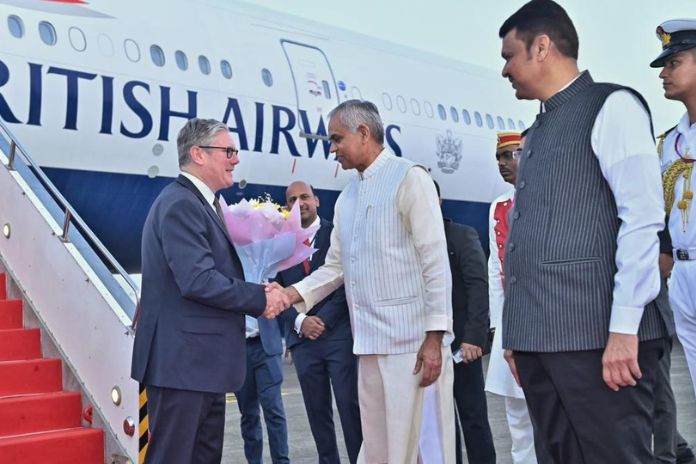
British Prime Minister Keir Starmer has arrived in Mumbai, India, leading a massive business and academic delegation in his first official visit since the historic UK-India Free Trade Agreement was signed earlier this year. The landmark mission features more than 125 representatives from top UK companies, higher education, and industry groups, all seeking to reinforce ties and maximize the benefits of the new trade deal.
India and the UK recently sealed a comprehensive free trade agreement with the goal of doubling bilateral commerce by 2030. For the year ending March 31, 2025, their trade in goods and services stood at £44.1 billion, showing a sharp increase and underscoring the growing economic importance of their partnership.
The Starmer-led delegation includes leaders and CEOs from major British firms, alongside vice-chancellors of 14 leading universities. The UK is pressing for quick implementation of the trade agreement, which will lower tariffs on products such as whisky, textiles, and automobiles, and enhance market access for businesses in both nations. British Airways, meanwhile, plans to boost UK-India connectivity with new direct flights, a sign of strengthening people-to-people links.
During his visit, Starmer emphasized that this agreement is more than a bureaucratic milestone—calling it a “springboard for future growth”—and urged business leaders to seize new opportunities. The agenda also includes boosting joint efforts in technology, fintech, higher education, and creative industries. While job creation and investment top the priorities, Starmer clarified that expanded UK visa access for Indians is not a focus of ongoing talks.
Prime Minister Narendra Modi welcomed Starmer’s visit, calling it the start of a “mutually prosperous future.” Both sides will review the “Vision 2035” strategic roadmap, covering trade, defense, innovation, and cultural ties. As India is set to become the world’s third-largest economy by 2028, the partnership is set to unlock substantial opportunities for both countries in the coming years.