Paris: UNESCO added 26 new World Heritage Sites in its 47th session of the World Heritage Committee which concluded in Paris today. India’s Maratha Military Landscapes, a network of 12 historical forts, was one of the sites to be included in the World Heritage List, recognising the diverse, historical and cultural landmark of India’s ancient forts.
Of the 26 new sites, 21 are cultural, 4 are natural landscapes and there is one mixed site. With the addition of Maratha Military Landscapes, India now has 44 World Heritage sites recognised by UNESCO, highlighting its cultural, natural, and historical treasures.
The 26 new sites added by UNESCO are:
1- Cambodian Memorial Sites: From centres of repression to places of peace and reflection (Cambodia)
2- Cultural Heritage Sites of Ancient Khuttal (Tajikistan)
3- Diy-Gid-Biy Cultural Landscape of the Mandara Mountains (Cameroon)
4- Faya Palaeolandscape (United Arab Emirates)
5- Forest Research Institute Malaysia, Forest Park Selangor (Malaysia)
6- Funerary Tradition in the Prehistory of Sardinia – The domus de janas (Italy)
7- Maratha Military Landscapes of India (India)
8- Megaliths of Carnac and of the shores of Morbihan (France)
9- Minoan Palatial Centres (Greece)
10- Mount Mulanje Cultural Landscape (Malawi)
11- Murujuga Cultural Landscape (Australia)
12- Petroglyphs along the Bangucheon Stream (Republic of Korea)
13- Rock Paintings of Shulgan-Tash Cave (Russian Federation)
14- Sardis and the Lydian Tumuli of Bin Tepe (Turkiye)
15- The Archaeological Ensemble of 17th Century Port Royal (Jamaica)
16- The Colonial Transisthmian Route of Panama (Panama)
17- The Palaces of King Ludwig II of Bavaria: Neuschwanstein, Linderhof, Schachen and Herrenchiemsee (Germany)
18- The Prehistoric Sites of the Khorramabad Valley (Iran)
19- Wixarika Route through Sacred Sites to Wirikuta (Tatehuari Huajuye) (Mexico)
20- Xixia Imperial Tombs (China)
21- Yen Tu-Vinh Nghiem-Con Son, Kiep Bac Complex of Monuments and Landscapes (Viet Nam)
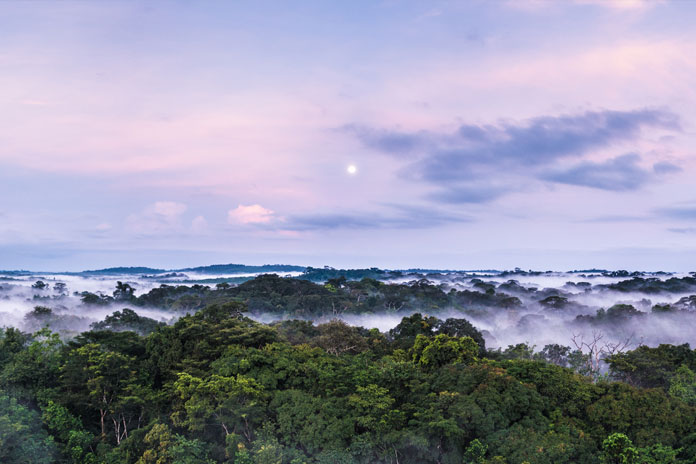
22- Cavernas do Peruacu National Park (Brazil)
23- Coastal and Marine Ecosystems of the Bijagos Archipelago – Omati Minho (Guinea-Bissau)
24- Gola-Tiwai Complex (Sierra Leone)
25- Mons Klint (Denmark)
26- Mount Kumgang – Diamond Mountain from the Sea (Democratic People’s Republic of Korea)
A Global and Inclusive Recognition
The 2025 listing includes first-time entries from Sierra Leone and Guinea-Bissau, addressing the underrepresentation of Sub-Saharan Africa, which accounts for less than 10% of all World Heritage sites. UNESCO aims to reduce this imbalance while also removing half of the region’s endangered sites by 2029.
In Sierra Leone, the newly listed Gola-Tiwai Complex—a rainforest and island sanctuary—is a biodiversity hotspot, home to endangered species like the Pygmy Hippopotamus and African Forest Elephant.
In Guinea-Bissau, the Bijagós Archipelago was recognized for its coastal and marine ecosystems, critical nesting grounds for leatherback and green sea turtles, and a refuge for manatees and dolphins.
With these new designations, Italy retains the top spot with 61 World Heritage sites, followed closely by China with 60.
Since the program began in 1978, the list has grown to over 1,100 sites, aiming to preserve places of “outstanding value to humanity” through global cooperation and sustainable preservation.