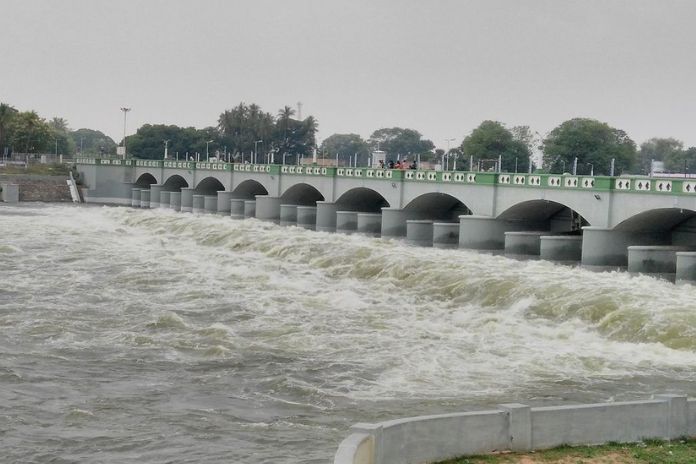
The long-running Cauvery water sharing dispute between Karnataka and Tamil Nadu has intensified again after a weak monsoon reduced water inflows into Karnataka’s reservoirs.
The latest disagreement is over how much water Karnataka should release to Tamil Nadu. Tamil Nadu says Karnataka is not releasing its due share under the existing legal framework. Karnataka, however, argues that releasing more water could threaten drinking-water supplies in Bengaluru and the needs of its farmers.
The dispute has also led to renewed political protests, legal action and debate over the proposed Mekedatu reservoir project.
Why are the two States fighting?
The Cauvery originates in Karnataka and flows through Tamil Nadu before reaching the sea. Karnataka is the upper-riparian State, while Tamil Nadu depends heavily on downstream releases for agriculture, particularly in the Cauvery delta.
During a normal monsoon, the two States follow a monthly water-release schedule. However, the arrangement becomes difficult to implement when rainfall is below normal.
Karnataka says poor rainfall has sharply reduced inflows into its reservoirs. It maintains that the normal-year sharing formula cannot be applied in the same way during a drought-like situation.
Tamil Nadu says the water shortage cannot be used as a reason to ignore legally mandated releases. It has accused Karnataka of retaining more water than necessary and has warned that inadequate supplies could damage crops during the Kuruvai and Samba cultivation seasons.
What did the water authorities order?
The Cauvery Water Regulation Committee directed Karnataka to release water to Tamil Nadu. The Cauvery Water Management Authority later upheld the release requirement and ordered Karnataka to maintain the specified flow.
Karnataka opposed the decision, saying its reservoirs were under pressure because of the rainfall deficit. The State indicated that it would challenge the order before the Supreme Court.
Tamil Nadu subsequently approached the Supreme Court, seeking directions to ensure that Karnataka released its due share of Cauvery water.
What is the legal framework?
The Supreme Court’s 2018 judgment adopted the allocation formula based on the Cauvery Water Disputes Tribunal award. In a normal year, the estimated basin yield is treated as 740 TMC.
The allocation is broadly divided as follows:
- Tamil Nadu: 404.25 TMC.
- Karnataka: 284.75 TMC.
- Kerala: 30 TMC.
- Puducherry: 7 TMC.
- Environmental needs and sea flow: 14 TMC.
Karnataka is also required to release 177.25 TMC annually at Biligundulu, the interstate border point. The CWMA and the Cauvery Water Regulation Committee were established to monitor implementation.
The unresolved issue of distress sharing
The most difficult issue is the absence of a mutually accepted formula for distress sharing.
The existing arrangement is primarily based on normal-year availability. It does not fully settle how shortages should be divided when the monsoon fails. Karnataka has demanded a proportionate reduction in releases during such periods. Tamil Nadu argues that Karnataka must still follow the schedule and cannot unilaterally reduce supplies.
This disagreement has caused repeated confrontations during years of poor rainfall.
Mekedatu project adds to tensions
The proposed Mekedatu reservoir in Karnataka has further complicated the dispute. Karnataka says the project would help meet Bengaluru’s drinking-water needs and regulate river flows.
Tamil Nadu opposes the project, fearing that it could give Karnataka greater control over Cauvery water before it reaches downstream areas.
What lies ahead?
The dispute is likely to remain politically sensitive as long as rainfall remains uncertain and both States face competing demands from farmers and cities.
A lasting solution would require stronger enforcement of the existing framework, transparent reservoir data and an agreed formula for sharing water during deficient monsoon years. Without such measures, the Cauvery conflict is likely to return whenever water levels fall.