Iran has launched retaliatory strikes against U.S. military bases in Jordan, Kuwait, and Bahrain following American airstrikes near the Strait of Hormuz authorized by President Donald Trump.
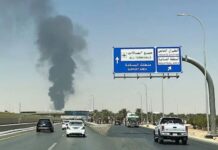
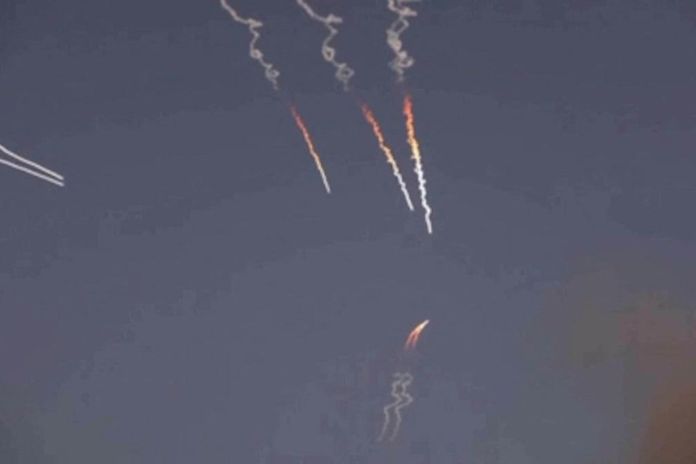
The conflict entered a dangerous new phase on June 9, 2026, when Tehran fired long-range missiles and attack drones at American positions across the Gulf region. The U.S. military reported that nearly all projectiles were successfully intercepted by air defense systems. Iran’s Islamic Revolutionary Guard Corps (IRGC) announced that its Aerospace Force targeted 21 U.S. assets, claiming to have destroyed fourIncluding F-35 fighter jet hangars at Jordan’s Azraq airbase.
What Triggered the Crisis
The violence began after a U.S. Army Apache helicopter was downed near the Strait of Hormuz, a critical chokepoint for global oil and gas shipments. Hours later, Trump authorized strikes on Iranian military targets in the port city of Bandar Abbas and on islands including Sirik, Jask, and Qeshm Island.
American forces attacked Iranian air defense systems, surveillance radars, and ground control stations for drone operations. The strikes targeted locations where Iranian attack drones had been launched against U.S. ships in the strait.
Where Iran Fired
Iran’s missile and drone attacks hit three main locations:
- Azraq Airbase, Jordan: The primary target, where IRGC claimed strikes destroyed F-35 hangars
- Ali Al Salem Base, Kuwait: U.S. air defense engaged hostile targets
- U.S. Fifth Fleet Base, Bahrain: Bahrain activated its defense systems
Jordan’s military intercepted five missiles from Iran, while Kuwait and Bahrain also reported successful defense operations against incoming projectiles.
Iran’s Response and U.S. Assessment
The IRGC stated its strikes targeted U.S. bases across the Gulf in retaliation for what Tehran called aggressive American actions. Iranian officials vowed that no attack on their country would go unanswered.
However, the U.S. Central Command assessed that nearly all Iranian missiles and drones were intercepted before reaching their targets. American forces reported minimal damage, with no casualties confirmed from the retaliatory strikes.
President Trump described Iran’s response as “unexpected” but emphasized that U.S. defenses held firm across the Gulf region.
Strategic Impact on Global Energy
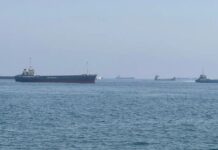
The crisis has disrupted shipping through the Strait of Hormuz, which carries approximately 21 million barrels of oil daily—roughly 21% of global petroleum consumption. The strait has been “largely obstructed,” raising concerns about energy supply disruptions.
Market analysts warn that continued obstruction could spike global energy prices and fuel inflation concerns worldwide. Shipping companies have begun rerouting vessels, adding time and cost to deliveries.
Regional Spread of Conflict
The conflict has spread across multiple countries from Iran to Jordan, Bahrain, and Kuwait. This geographic expansion marks a significant escalation from earlier tensions that remained more localized.
Jordan, a key U.S. ally in the region, played a critical defensive role by intercepting Iranian missiles. Kuwait and Bahrain, both hosting major U.S. military installations, also activated their air defense systems.
What Happens Next
Tensions remain extremely high as both nations maintain aggressive postures. Iran has closed key airspace near its borders, while the U.S. continues military operations near the Hormuz Strait.
Diplomatic efforts remain limited as Trump has urged restraint to protect ongoing negotiations, though the president simultaneously authorized further military strikes. The situation could escalate further if either side launches additional attacks.
Bottom Line
This confrontation represents one of the most serious direct U.S.-Iran military clashes in recent years. With the Hormuz Strait disrupted and strikes hitting multiple countries, the risk of broader regional war has increased significantly. The international community faces pressing concerns about energy security, inflation, and the potential for the conflict to expand further across West Asia.