China has urged India to maintain what it calls the “right strategic perception” of their relationship — that the two Asian giants are cooperative partners working together, not rivals competing against each other.
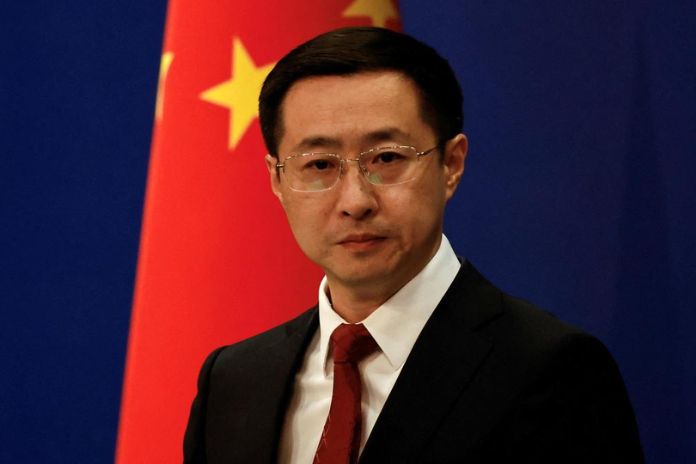
Chinese Foreign Ministry spokesperson Lin Jian made the statement on June 8, 2026, emphasizing that both countries should see each other as opportunities for development rather than threats.
“China and India should stick to the perception that the two countries are cooperative partners, not competitors and rivals, and both countries are opportunities for each other’s development, not threats,” Lin Jian said.
What China Wants From India
The Chinese official outlined three main points for improving bilateral relations:
First, both sides need to handle their relationship from a higher strategic level and take a long-term view rather than focusing on short-term disagreements.
Second, the countries should work to expand cooperation in areas where they can benefit each other, building on shared interests.
Third, China wants both nations to properly manage their differences without letting them derail the overall relationship.
The goal, according to Beijing, is to promote steady and sound development of China-India relations for the benefit of both nations.
Background: Recent Improvements in Ties
This statement follows a significant diplomatic breakthrough. In August 2025, Indian Prime Minister Narendra Modi met with Chinese President Xi Jinping in Tianjin, Russia. During that meeting, both leaders agreed to act as partners rather than rivals and to expand exchanges between their countries.
The Tianjin meeting marked positive progress in bilateral ties after years of tension stemming from the 2020 Galwan Valley clash along the disputed border. That incident led to a severe deterioration in relations, with both countries imposing trade restrictions and maintaining a military standoff.
China Responds to Putin’s Comments
Lin Jian’s statement also addressed remarks made by Russian President Vladimir Putin about Sino-Indian relations. The Chinese spokesperson acknowledged Moscow’s efforts to maintain close ties with both India and China, noting Russia’s position as a friend to both Asian powers.
This reflects the complex geopolitical dynamics in the region, where Russia maintains strong relationships with both Beijing and New Delhi despite their border tensions.
Persistent Challenges Remain
While China pushes for improved relations, significant challenges continue between the two nations:
Border disputes remain unresolved. The 3,488-kilometer Line of Actual Control (LAC) continues to be points of military tension, with both countries maintaining large troop deployments.
Trade imbalance favors China heavily. India imports far more from China than it exports, creating economic concerns in Delhi.
Regional geopolitics create friction. China’s close relationship with Pakistan and India’s strengthening ties with the United States and other Western nations add strategic complexity.
Water security concerns persist. India worries about China’s control over Himalayan river sources that feed major Indian rivers.
India’s Position
While China has repeatedly called for improved relations, India has maintained a more cautious approach. Delhi emphasizes that trust must be built through concrete actions, particularly regarding border security and fair trade practices.
Indian officials have stated that normal relations require China to demonstrate respect for India’s sovereignty and security concerns, especially along the disputed border.
What This Means for Both Nations
For China, improving relations with India would help stabilize Asia’s geopolitical landscape and open economic opportunities. Beijing sees India’s growing economy as a potential market for Chinese goods and investments.
For India, better ties with China could boost trade, reduce military tensions, and allow Delhi to focus on other strategic priorities. However, India remains wary of becoming too dependent on China economically.
Looking Forward
The Chinese statement reflects Beijing’s continued effort to normalize relations with India after years of tension. Whether this push for partnership gains traction will depend on both countries’ willingness to address underlying security and economic concerns.
The path forward requires both nations to balance their strategic competition with practical cooperation, finding areas where mutual interests align while managing differences that cannot be immediately resolved.
As two of the world’s largest populations and fastest-growing economies, stable China-India relations matter not just for Asia, but for global stability and economic development in the 21st century.