Iran has brushed off fresh U.S. threats of “coordinated economic isolation,” with top diplomats in Tehran calling the move a failed strategy that will ultimately harm Washington more than Iran.
Trump’s “economic D‑Day” warning
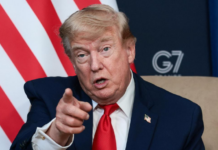
President Donald Trump announced what he described as the “most crushing economic operation ever taken against any country,” framing it as a new phase of “economic warfare” against Iran.
In social media posts and public remarks, he warned that any country allowing its banks, businesses, airports or government bodies to provide “any type of lifeline to Iran” would face “tremendous economic consequences.”
The announcement comes as part of a broader pressure campaign the administration has been running since April under the label Operation Economic Fury, which has already targeted Iranian oil sales, shipping and financial networks.
U.S. officials have linked the push to stalled negotiations over security in the Strait of Hormuz and Iran’s nuclear programme, though Trump did not spell out new measures beyond existing sanctions and a naval blockade of Iranian ports.
Tehran’s response: “Failed policy” and “economic terrorism”
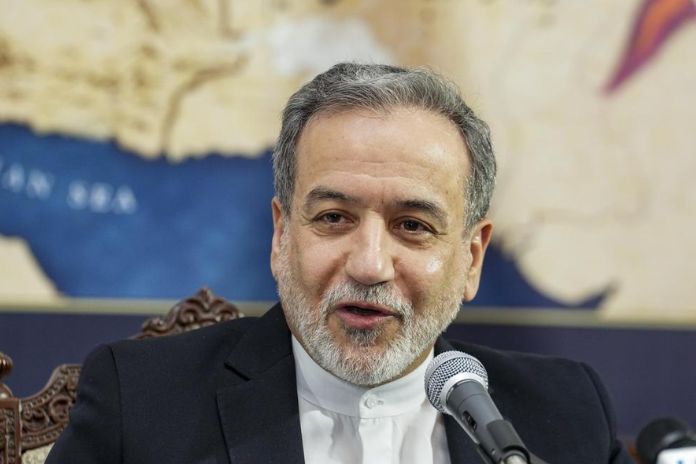
Hours after Trump’s remarks, Iranian Foreign Minister Abbas Araghchi dismissed the threats as a continuation of policies that have not worked in the past.
Araghchi argued that the “economic D‑Day” language is mainly a diversion from America’s own fiscal problems, pointing to rising U.S. debt and higher interest costs.
He repeated Tehran’s long‑standing charge that U.S. sanctions amount to “economic terrorism”, saying they punish ordinary Iranians and violate national sovereignty.
In a post on X, Araghchi wrote that “doubling down on failed policies will only bring further defeat—and enmity of Iranians,” adding that such coercion threatens the global economy and the sovereignty of other nations.
Iran’s foreign ministry issued a separate statement condemning the U.S. threat as “illegal and inhumane” and vowing to use “all means and capacities” to defend the country’s sovereignty.
Why this matters for markets and the region
The U.S. is pushing for secondary sanctions and coordinated pressure on third countries and firms that maintain trade, finance or transport links with Iran. The goal is to tighten an effective near‑total economic blockade.
China, the largest buyer of Iranian oil, is a key focus of the U.S. warning, though no specific country was named in Trump’s initial statements.
For global markets, the main risk is an escalation spiral: stricter U.S. enforcement, possible Iranian counter‑measures or proxy responses, and heightened uncertainty around oil flows through the Strait of Hormuz, a critical chokepoint for world energy supplies.
Iran’s leadership is signaling it will not concede under pressure and is trying to frame the U.S. move as illegitimate and destabilising for the wider region.
What could come next
Analysts note that Iran has lived under heavy American sanctions for decades and has developed workarounds in oil sales, banking and shipping. That history makes it unclear how much additional bite new U.S. steps will have without broader international cooperation.
At the same time, tougher U.S. enforcement could strain relations with trading partners who do not fully align with Washington’s Iran policy, especially if secondary sanctions are applied aggressively.
For now, the rhetoric on both sides is hardening: Washington speaks of “economic warfare,” while Tehran warns of “backfire” and deeper hostility. The next phase will likely depend on how seriously third countries adjust their dealings with Iran in response to U.S. threats.