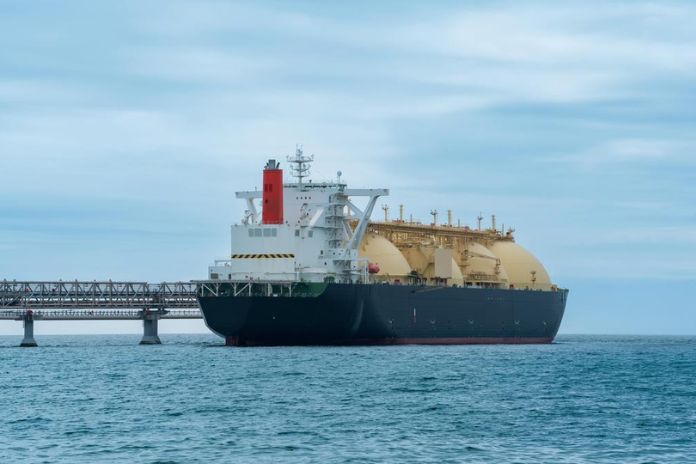
A Russian‑flagged liquefied natural gas (LNG) tanker has successfully delivered a cargo from Russia’s Portovaya LNG plant to a terminal in China after nearly six months at sea. This unusual voyage highlights how Moscow is adapting to Western sanctions and using slow, indirect shipping routes to keep supplying one of its most important energy partners.
What happened with the tanker?
The LNG carrier loaded its cargo at Gazprom’s Portovaya LNG terminal on the Baltic Sea, one of Russia’s key LNG export facilities that has faced sanctions from the United States and European Union. Instead of heading straight to Asia, the vessel spent several months at sea before arriving at a Chinese LNG terminal, likely in southern China such as Beihai.
Shipping data from LSEG and other maritime‑tracking platforms show that the tanker did not follow a direct or fast route. It appears to have lingered at sea for extended periods, possibly to avoid tighter monitoring, dodge sanctions‑related risks, or wait for favourable market conditions and port‑availability windows. This long “floating” period allowed the operator to manage insurance, financing, and paperwork while still delivering the cargo.
Why the six‑month voyage is significant
The six‑month sea journey is much longer than a typical LNG trip from Europe to Asia, which usually takes a few weeks. The extended route underscores how Russia is relying on indirect logistics to keep selling LNG abroad despite Western export controls. By using longer, less‑visible routes and sometimes “shadow‑fleet”‑style operations, Russian companies can still reach price‑sensitive buyers like China.
China, for its part, continues to prioritise energy‑security and diversification. Russian LNG provides a non‑Middle Eastern source of gas that helps Beijing reduce over‑dependence on any single region or supplier. For Russia, China is a crucial market for “sanctioned” LNG volumes that third‑country buyers may otherwise avoid.
How this fits into Russia–China energy ties
The delivery is part of a broader trend of growing Russia–China energy cooperation. Even after Western sanctions were imposed on Russia’s Arctic LNG‑2 and Portovaya projects, fresh cargoes have kept appearing in Chinese ports. Chinese firms have signed long‑term contracts for Russian LNG, and Beijing has shown little appetite for fully cutting off this flow, even as it publicly criticises sanctions.
Shipping analysts note that Russian LNG tankers are increasingly using routes that avoid busy chokepoints or draw less scrutiny, sometimes looping around Africa or lingering in quieter waters. These tactics make it harder for Western authorities to track cargoes in real time, although satellite and AIS‑based monitoring still capture many of these movements after the fact.
Sanctions, shadow‑fleet patterns, and market impact
While the tanker itself may not be formally blacklisted, its prolonged voyage raises questions about “sanction‑dodging” patterns. Under Western rules, financing, insurance, and certain services are restricted for Russian LNG projects linked to Portovaya and Arctic LNG‑2. Carriers and operators that use indirect routes or change ownership structures can blur the line between legal and grey‑market trade.
Even so, the very fact that a sanctioned Russian LNG cargo reached China after six months shows that enforcement is not watertight. For China, the takeaway is simple: Russian gas remains available, albeit at higher logistical and compliance cost. For Russia, it confirms that long, winding routes can still unlock access to Asian markets.
What this means for global LNG markets
The six‑month voyage also signals that Russia is adapting to a new trading environment. Instead of relying on fast, efficient, GPS‑style routes, it is willing to accept slower, more complex logistics in order to keep exports flowing. This can slightly distort global LNG flows, as cargoes that might normally reach Europe or other Asian hubs instead arrive in China via longer, less predictable paths.
For energy‑importing countries outside the immediate Russia–China axis, the episode underlines how difficult it is to fully isolate one major supplier. It also reminds policymakers that sanctions shape, but do not always stop, international energy trade.
In brief
A Russian LNG tanker has delivered gas to China after almost six months at sea, using an indirect route that illustrates how Russia is adapting to sanctions and still supplying its key Asian partner. The long voyage reflects broader shifts in LNG shipping, compliance tactics, and the strengthening Russia–China energy relationship, all of which are likely to shape global gas markets for years to come.