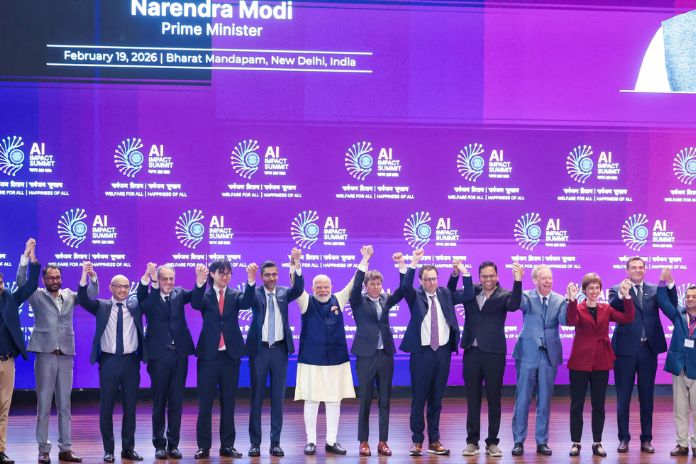
Prime Minister Narendra Modi has ignited a bold vision for AI’s future. At the India AI Impact Summit 2026 in New Delhi, he introduced MANAV—a human-first blueprint that could transform artificial intelligence into a “global commons,” much like shared oceans or air, benefiting all humanity.
What is MANAV?
MANAV, Hindi for “human,” rests on five core pillars to ensure AI serves people responsibly:
- Moral and Ethical Systems: Guiding AI with strong values.
- Accountable Governance: Clear rules and oversight.
- National Sovereignty: Protecting data and national interests.
- Accessible and Inclusive: Tools for everyone, everywhere.
- Valid and Legitimate: Verifiable, lawful tech.
Modi emphasized AI should empower humans, not replace them. Critical decisions must stay under human control, preventing misuse while unlocking potential.
AI as Global Commons
Think of global commons as resources no single country owns—like the atmosphere. For AI, it means open access to computing power, data, and models for solving worldwide issues, from climate change to healthcare. Modi called for a “global common good,” building on India’s G20 push for AI compacts that curb risks and ensure equity.
This isn’t just talk. India, home to one-sixth of the world’s people, is rolling out nationwide AI computing and skills programs via the IndiaAI Mission. New domestic AI models launched at the summit show India’s readiness.
Why India Leads
Modi invited global tech giants to build together in India, bridging the Global South’s needs with universal standards. MANAV positions India as a pioneer in ethical, sovereign AI—democratizing tech so it’s not hoarded by a few.
In a world racing toward AI dominance, MANAV offers a humane path. If embraced globally, it could make AI a force for shared progress. Will world leaders follow Modi’s lead?