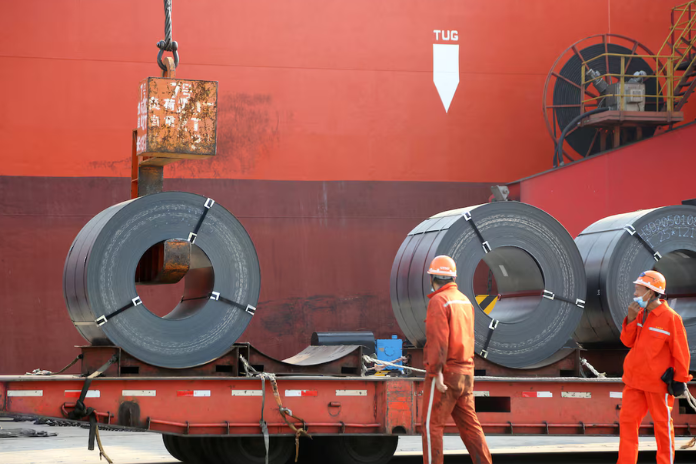
India has rolled out a three-year tariff on certain steel products to tackle a sharp rise in cheap imports hurting local producers. The finance ministry issued the order after the Directorate General of Trade Remedies (DGTR) flagged serious damage to the domestic industry.
This move comes amid global trade shifts, with Chinese steel flooding markets due to US tariffs under President Donald Trump. Imports jumped suddenly, threatening jobs and prices in India’s steel sector. The duty starts at 12% and eases slightly over time to balance protection and trade.
Key Tariff Breakdown
The safeguard duty targets non-alloy and alloy steel flat products, including hot-rolled coils, sheets, plates, cold-rolled coils, metallic coated items, and color-coated coils. These fall under customs headings like 7208, 7209, 7210, 7211, 7212, 7225, and 7226.
Exemptions apply to stainless steel, electrical steels, tinplate, and shipments from some developing nations. But imports from China, Vietnam, and Nepal face the full hit. The tariff kicks in from April 2025, replacing a short-term 12% provisional duty that ended earlier this year.
Why Now? The Import Threat
DGTR noted a “recent, sudden, sharp, and significant” import spike causing real harm. Indian steelmakers struggled against low-priced foreign goods, especially as China rerouted exports blocked by US policies. This follows ongoing anti-dumping cases and builds on past measures.
The decision offers big relief to firms like Tata Steel and JSW Steel. Their shares climbed post-announcement, showing market faith in stabilized local production and pricing.
Broader Market Ripple
Steel stocks surged, with Tata Steel and JSW leading gains. This protects a key sector vital for construction, autos, and infrastructure. It also signals India’s firm stance on fair trade amid rising global protectionism.
Experts see this as a smart step to boost self-reliance. While imports may dip, it could raise costs for downstream users short-term. Long-term, it aims to revive domestic capacity and curb job losses.
India’s steel push aligns with Atmanirbhar Bharat goals. Watch for reactions from China and effects on bilateral ties. For now, local makers breathe easier.