

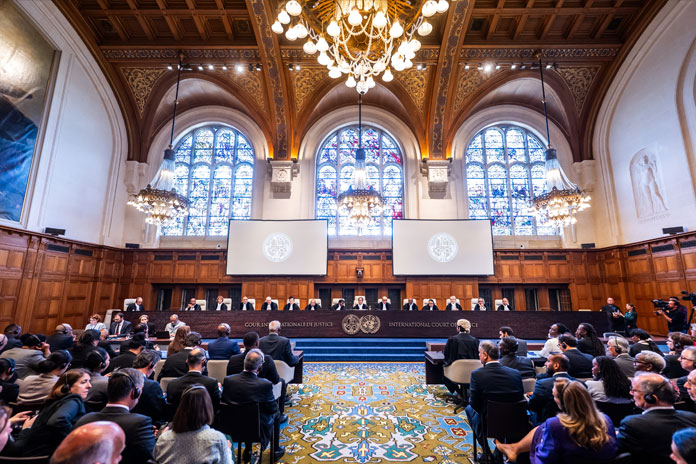
In a landmark advisory opinion, the International Court of Justice (ICJ), the world’s highest court has declared a “clean, healthy and sustainable environment” is a human right, and failing to protect the planet from the impacts of climate change may be a violation of international law.
This watershed ruling on 23 July, opens new doors for climate action, impacting not just the United Nations Framework Convention on Climate Change process but also how climate law is perceived across jurisdictions globally.
Outlining the obligations of states to protect the human rights of citizens being impacted by rising global temperatures, the ICJ, which is based in The Hague, ha said that climate must be protected for “present and future generations.”
Reading the ruling, ICJ President Yuji Iwasawa said “greenhouse gas emissions are unequivocally caused by human activities and have cross-border effects” with far-reaching consequences.
These he said, “underscore the urgent and existential threat posed by climate change.”
Iwasawa said countries have a duty to cooperate on preventing harm caused by climate change and must make sure their national climate targets represent the highest possible ambition.
Reacting to the decision, Vishal Prasad, director of Pacific Islands Students Fighting Climate Change, welcomed the ruling as a “lifeline” for Pacific communities facing some of the worst impacts of climate change.
“Today, the world’s smallest countries have made history. The ICJ’s decision brings us closer to a world where governments can no longer turn a blind eye to their legal responsibilities,” he said.
United Nations Secretary-General António Guterres welcomed the ICJ ruling saying “The court made clear that all States are obligated under international law to protect the global climate system. This is a victory for our planet, for climate justice and for the power of young people to make a difference.”
Important case in ICJ history
The case began after students from Pacific Island countries lobbied governments into calling for the legal clarification.
The state of Vanuatu requested the ICJ to rule on the obligations of states under international law to protect the climate and environment — and by extension present and future generations — from greenhouse gas emissions.
Speaking in front of the court following the decision, Vanuatu’s Climate Change Minister Ralph Regenvanu called the ruling a “landmark milestone for climate action.”
“It’s a very important course correction in this critically important time. For the first time in history, the ICJ has spoken directly about the biggest threat facing humanity, which is climate change,” he added. “It points to the critical nature of this issue and also the consensus of most people in the world that we need to really address it as a matter of urgency.”
In December, the court heard testimonies from almost 100 countries and 12 international organizations.
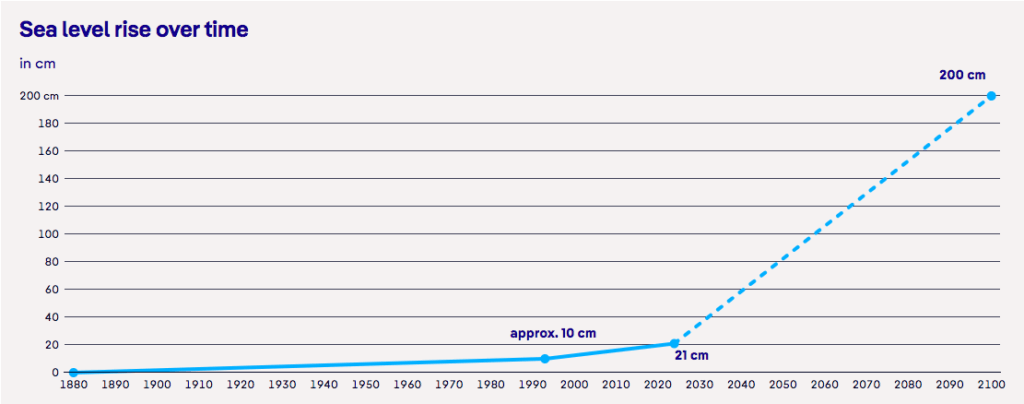
Speaking at the time, Gaston Browne, prime minister of Antigua and Barbuda, told judges that sea level rise driven by “unchecked emissions” was eroding island coastlines and “swallowing land that is vital to our country.”
The Caribbean archipelago is being eroded by rising sea levels and faces more intense storms as a result of the impacts of a warming world.
Also speaking as part of the December hearings, high-emitting nations, like the United States, said existing UN treaties — primarily the 2015 Paris Agreement — already provide legal obligations on action toward slowing climate change.
President Donald Trump has since announced US withdrawal from the landmark accord that saw 195 nations agree to reduce carbon emissions and pursue efforts to limit global warming to no more than 1.5 degrees Celsius (2.7 Fahrenheit).
But experts say the Paris agreement was never intended to define all laws around climate change.
The start of a new era for climate justice
In bringing the case to the court, Vanuatu also asked for clarification on the legal consequences for countries that failed to meet their obligations on slowing their emissions.
Some experts have said countries and regions that have emitted most CO2 cumulatively — including the United States, China, Russia and the European Union — carry the most responsibility for global warming.
Past emissions matter and the harm that has already been done must be recognized and repaired.
Poorer countries have long been calling for richer nations to pay for damage caused by extreme weather linked to the emissions that are heating the planet. Many of these less wealthy states are experiencing the worst impacts of climate change, despite having done the least to contribute to the crisis.
The ICJ advisory warned that “adverse impacts and loss and damage will escalate with every increment of global warming.”
It made clear that countries have to meet their climate obligations or potentially see affected nations seek reparations through legal action.
A loss and damage fund was established at UN climate negotiations two years ago in Dubai, but has only received around $700 million in pledges. That is far lower than the hundreds of billions of dollars experts say climate change could cost in damages by 2030.
“At its heart, this case is about accountability. It’s a signal to end the era of empty pledges,” legal experts have added.
ICJ ruling could influence climate litigation
The ICJ advisory opinion is one of three that have been delivered in past months outlining state obligations around climate action.
Earlier this month, the Inter-American Court of Human Rights issued an advisory opinion asserting countries’ obligations to protect citizens’ human rights by ensuring a healthy environment and stable climate.
Although advisory opinions are not legally binding, they hold significant legal weight and moral authority.
One impact could be on litigation being brought against governments and companies over climate impacts. So far, around 3,000 cases have been filed in almost 60 countries. Joana Setzer, associate professorial research fellow at the Grantham Research Institute at the London School of Economics, said the advisory opinion marks a “turning point” for litigation.
“It’s authoritative interpretation of countries’ legal obligations will serve as a crucial tool for domestic courts, litigants and advocates striving to hold governments accountable,” she said.
The advisory ruling will now have far-reaching consequences for the November COP30 climate negotiations in Brazil. It could mean not everything is up for negotiation, because some things have been clearly legally defined.
The world and specially the pacific island states hope that this clarity will provide a very clear legal blueprint which would allow states and those most affected on the front lines to hold polluters accountable for climate disruptive conduct and to secure remedy and reparations.





, the world's highest court has declared a "clean, healthy and sustainable environment" is a human right, and failing to protect the planet from the impacts of climate change may be a violation of international law. This watershed ruling, opens new doors to for climate action, impacting not just the United Nations Framework Convention on Climate Change process but also how climate law is perceived across jurisdictions globally.)