A recent preliminary report by the Aircraft Accident Investigation Bureau (AAIB) has revealed that the Air India Flight AI171 crash, which claimed 260 lives including 19 on the ground, was caused by both engines shutting down seconds after takeoff due to a sudden fuel cutoff. The Boeing 787-8 Dreamliner was en route from Ahmedabad to London Gatwick on June 12, 2025, when the tragic incident occurred.
According to the 15-page report released early Saturday, the fuel control switches for both engines shifted from “RUN” to “CUTOFF” within seconds of each other shortly after the aircraft became airborne. This movement immediately starved the engines of fuel, leading to a complete loss of thrust. The cockpit voice recorder captured one pilot asking, “Why did you cut off the fuel?” to which the other responded, “I didn’t do it,” raising serious questions about what exactly happened in those final moments.
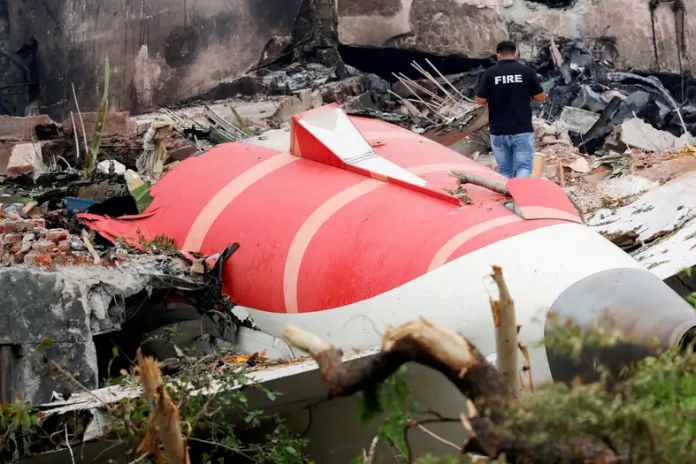
Despite the crew attempting to return the switches to the RUN position and restart the engines, there wasn’t enough time to recover. The plane crashed in a populated area near the airport, causing severe damage and additional fatalities on the ground. An emergency system, known as the Ram Air Turbine, deployed automatically as a result of the total engine failure, confirming the aircraft lost all primary power.
The report found no mechanical fault in the engines or the aircraft itself. It also highlighted that Air India had not conducted checks recommended by a 2018 FAA advisory, which warned of possible disengagement issues with the fuel switch locking mechanism. Though the advisory was not mandatory, the omission may prove to be a significant oversight.
Both pilots were experienced, medically fit, and well-rested. With no technical fault identified, the focus of the investigation now shifts to understanding whether the switch movement was the result of human error, miscommunication, or some other unknown factor. The final AAIB report is expected to delve deeper into these possibilities in the coming months.
This crash marks one of the worst aviation disasters in India in recent decades and has prompted widespread discussions around safety protocols, training, and aircraft system designs. Investigators from India, the United States, and the United Kingdom, along with Boeing and GE, are collaborating closely to ensure all aspects of the crash are thoroughly examined.